
There is a great calamity perpetrated weekly at many, if not most, churches. Unfortunately this terrible practice is actually supposed to reflect the truth of the complete opposite of much of our modern “Christian” reality. What has infected the Church? The increasingly empty practice of the “Lord’s Table” or “Communion.”
Protestant and Catholic alike focus on the atoning (covering over/cleansing of sin) aspect of the cross; the bridge of the gap between God and man. What is nearly universally ignored, in practice, is the power of that atonement to bring humans into communion fellowship with other humans. We think it wonderful to be forgiven our sin in the afterlife, but miss the present pedestrian power of the cross to bridge the gap between one person and the next. If the topic is addressed at all, it is in passing and largely to deafened ears.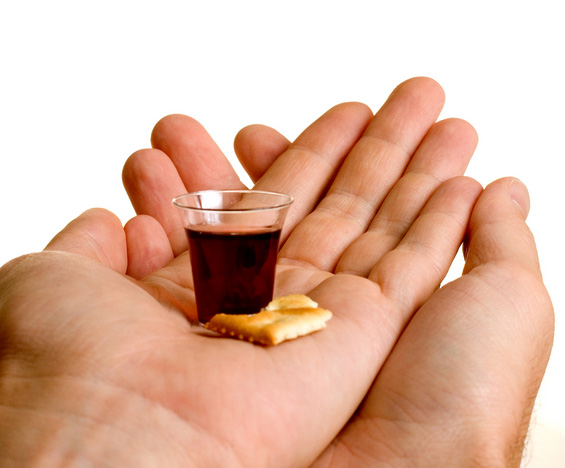
Jesus did not die just to keep God from sending us all to hell. The blood of the Son of God did not stain the ground just so the dirt of our rebellion would be washed away. The darkened tomb did not receive the light of the world just so we live in the dawn of hope. There was, and is, and will be more power in the cross. Jesus proclaimed and commanded it.
Communion is connection to God and His Son exemplified by repeated acts of obedience:
“Whoever has my commandments and keeps them, he it is who loves me. And he who loves me will be loved by my Father, and I will love him and manifest myself to him.” ” (John 14:21, ESV)
Our obedience places God first and our neighbor right behind:
“And you shall love the Lord your God with all your heart and with all your soul and with all your mind and with all your strength.’ The second is this: ‘You shall love your neighbor as yourself.’ There is no other commandment greater than these.” ” (Mark 12:30–31, ESV)
This neighbor-love is to be the identifying mark of those who belong to Jesus:
“So now I am giving you a new commandment: Love each other. Just as I have loved you, you should love each other. Your love for one another will prove to the world that you are my disciples.”” (John 13:34–35, NLT)
This bent toward communion with God resulting in practical interpersonal implications was not new on Jesus’ lips. A millenia before the Advent God told the newly formed Hebrew nation that He would be God alone and, as God, he commanded them to treat each other with honor and respect and to be lacking in the evil behaviors so common to humankind. God further instructed them about how to achieve communion within community.
This is something Christianity lost and needs to regain quickly so that the full power of the Table is witnessed to in our generation.
My friends at Main Street will be considering these things in the week to come.


 TheNarrowRoadPursued
Oh that we could truly love the way that Christ loves, unconditionally and without fear. Community with Christ and each other is something we so need. Why isn’t this easier for us?
So true. I miss how Pastor Truman and Pastor Sammy had us make sure we were right with each other before we took part. They would emphasize Mathew 5:23-24, and 1 Cor 11:27-30 exhorting us to be sure that we were in fellowship with our brothers and sisters in Christ, and with God, so that we would not take the Lord’s supper unworthily. I do not see this practiced any more and it makes me sad.
“You have to work hard to offend Christians. By nature, Christians are the most forgiving, understanding, and thoughtful group of people I’ve ever dealt with. They never assume the worst. They appreciate the importance of having different perspectives. They’re slow to anger, quick to forgive, and almost never make rash judgments or act in anything less than a spirit of total love. . . . No, wait—I’m thinking of golden retrievers!”
— found online, filed under “sad but true”