
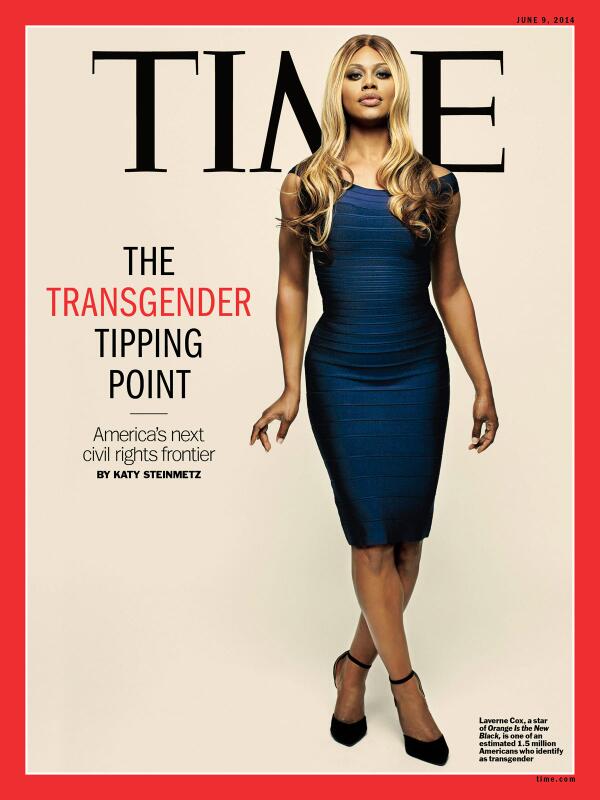
 This is a time of rapid change in our world. The speed of the change is overwhelming, even for the well-equipped. There is a solace, however, to be found in the One who sees it all and for whom nothing is new.
Yesterday I spoke to the topic of gender identity. I read in entirety this very fine article written by Dale Kuehne (click the hyperlinks to access).
Cited here and originated here.
After the morning message, I received the following question written on a gum wrapper:
So if you were once a male but now female [due to a sex change?] and you are interested in women are you straight or a lesbian?
The question misses the ‘identity’ point entirely. In a world where even the categories of ‘male’ and ‘female’ are soon to fall into disuse, labels like ‘straight’ and ‘lesbian’ also become meaningless. I contend they are already commonly meaningless and only used to promote ends of social and political deconstruction.
Our identity can only be found in God through Christ Jesus. Only when we have, to quote from Dr. Kuehne’s article again, a reference point outside ourselves will we be able to know the ‘what and who’ of what makes ‘me.’
In short, if the ultimate source of reference is the self, and if no other self than the individual is a reference point, how can you know who or what you are?
Discovering ‘what’ we are can only be attained by discovering ‘whose’ we are and from ‘where’ we came. Finding true identity requires an authority outside of ourselves, to whom we must respond, yes even yield.
And that is the problem, has been the problem, and will be the problem. We lust after being our own gods and assert ourselves as such as often as possible. Many who acknowledge the existence of God find it quite easy to inform God as to what is right or wrong, marred or unmarred, as if God were somehow unaware or unable to grapple with the complexity of our day.
This is God’s claim on us and to us:
I will be your God throughout your lifetime–until your hair is white with age. I made you, and I will care for you. I will carry you along and save you. To whom will you compare me? Who is my equal? (Isaiah 46:4,5 NLT)
Lay aside the ever-changing categories of the moment. Take up the gift Paul, by the Holy Spirit, instructs to wear:
But you did not learn Christ in this way, if indeed you have heard Him and have been taught in Him, just as truth is in Jesus, that, in reference to your former manner of life, you lay aside the old self, which is being corrupted in accordance with the lusts of deceit, and that you be renewed in the spirit of your mind and put on the new self, which in the likeness of God has been created in righteousness and holiness of the truth. (Ephesians 4:20-24, NASB)






 TheNarrowRoadPursued